


Arrow Smash: Earn Cash
4.3774.00 Reviews
App Specs
- Version
- 1.0.13
- Updated On
- License
- Free
- Downloads
- 1,000,000+
- Developer
- PT ANUGRAH KERTAS UTAMA
- Categories
- Casual
- Platform
- Android
Screenshots
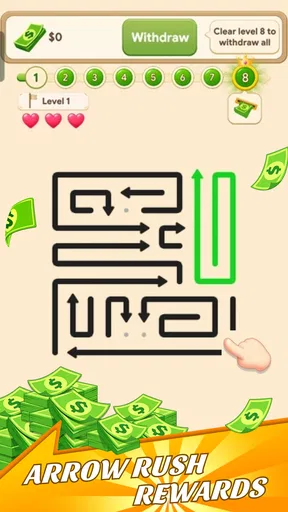
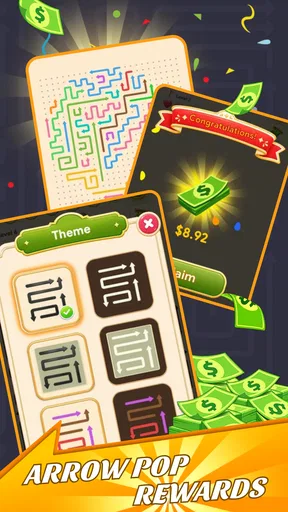
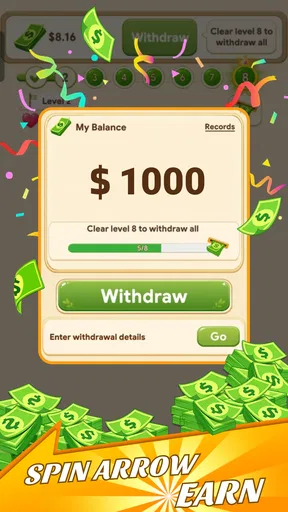
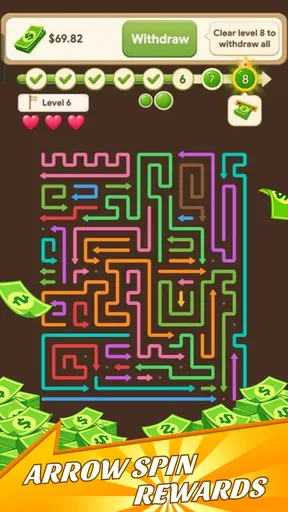
 Analysis by AppCompare
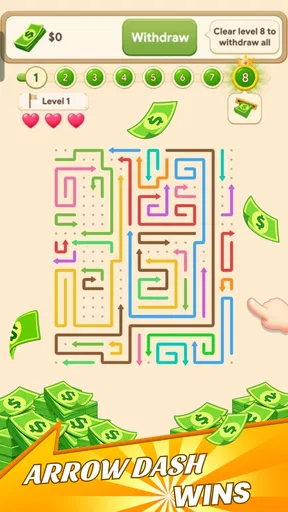
I spent time with Arrow Smash: Earn Cash as a quick, casual puzzle game, and my main impression is that it works best when treated as a compact distraction rather than a complete gaming destination. Its appeal comes from the simple idea suggested by its name: arranging your attention around arrows, timing, and clean puzzle decisions without demanding a large commitment from the player. That makes it easy to pick up when I have a spare moment, although it also means the experience may feel too lightweight for anyone looking for a deep progression system or a long-form challenge.
The game is free to install and belongs to the casual category, so its natural audience is people who want something approachable rather than a complicated strategy title. PT ANUGRAH KERTAS UTAMA is the developer, and the game has already passed one million installs with an average rating of 4.3 from around eighteen thousand ratings. Those figures suggest that the basic concept has found a sizeable audience, but they do not change my practical conclusion: the real question is whether you enjoy short puzzle sessions built around repetition and quick decisions.
How the arrow puzzles fit into everyday play
The strongest part of the experience is its low barrier to entry. I do not need to study a lengthy rulebook or spend a long time learning a complicated interface before making progress. The minimalist presentation keeps the focus on the puzzle itself, which is useful when I want to play during a short break, while waiting for an appointment, or after finishing a task and needing a brief mental reset.
That simplicity is more valuable than it first appears. Many puzzle games introduce several systems at once, then surround the board with menus, currencies, missions, and upgrade screens. Here, the central arrow-focused idea gives the game a more immediate rhythm. I can concentrate on what is in front of me instead of constantly switching between separate activities. For casual players, that directness is a genuine strength.
In a realistic everyday scenario, I would use it during a ten-minute commute or while waiting for food. I could open the game, solve a few puzzles, and stop without feeling that I had abandoned a major campaign. That makes it a better fit for fragmented free time than a story-driven game that expects uninterrupted attention. It is also less mentally demanding than a competitive multiplayer title, because I am not entering a match against another person or worrying about team performance.
The arrow theme gives the puzzles a recognizable identity, even though the overall presentation remains restrained. I found that the minimalist approach helps when I want a cleaner screen and fewer distractions. At the same time, players who depend on rich visual variety may find the restraint less exciting over longer sessions. The same quality that makes the game easy to understand can also make it feel repetitive if I keep playing after the short-session appeal has worn off.
What makes the minimalist approach work
The game’s design is most effective when I use it as a focused exercise in observation. Rather than rushing through every move, I get more value by looking at the full arrangement first and considering how one arrow affects the next decision. That small pause is an important habit: it reduces careless moves and turns a very simple-looking board into a more deliberate puzzle.
Worth Reading Before You Choose

EA SPORTS FC Mobile 26 Is a Bigger Football Game, but It Takes Time

Flipboard Shows What News Apps Must Do Beyond the Feed

Switching to Android Auto Means Rethinking Your Driving Routine

Google Calendar Makes a Crowded Week Easier to Manage

Ludo King Makes the Most of the Minutes Between Plans

Baby Panda World Brings Quick Play to Modern Phones, but Its Game Library Feels Busy
My practical tip is to avoid treating every level as a race. When the board looks crowded or several directions compete for attention, I first identify the move that appears least likely to block another path. This kind of forward planning is more useful than tapping quickly. It also gives the game a little more depth than its stripped-back appearance suggests, because the challenge comes from managing order and consequences rather than from complicated controls.
Another useful approach is to play in short batches. I found that a few rounds can feel satisfying, while a much longer session exposes the limits of the format. Taking a break helps preserve the game’s relaxing quality and prevents the arrow layouts from blending into one repetitive sequence. For me, that is the best way to enjoy it: use the compact structure as a feature instead of expecting it to behave like a full-scale puzzle adventure.
The title’s cash-oriented wording may also shape expectations, so I would approach it carefully. I see the name as part of the game’s appeal, but I would not install it solely because I expect a dependable source of income. A casual puzzle game is best judged first by whether its play feels enjoyable and convenient. Anyone interested in the money angle should read the in-game explanations closely and make decisions based on what is actually shown while playing, rather than assuming that the title guarantees a particular result.
Where the experience starts to feel limited
The main weakness is not that the game is simple; simplicity is clearly part of its purpose. The issue is that simple puzzle play has a relatively narrow ceiling. Once I understand the basic rhythm, the experience depends heavily on whether the individual arrangements continue to feel fresh and satisfying. If I want a stronger sense of discovery, a story, or a broad collection of puzzle types, I am likely to outgrow this one sooner than I would a larger alternative.
This is also where the minimalist presentation becomes a trade-off. A clean interface helps me focus, but it gives the game fewer tools for creating atmosphere or emotional momentum. There is less reason to keep playing for its world, characters, or narrative because the attraction is concentrated in the immediate puzzle loop. That is fine for a quick diversion, but it makes extended sessions harder to justify.
I would also be cautious about confusing a free download with a completely frictionless experience. Free casual games often ask players to make decisions about time, attention, and optional in-game activity, and I recommend paying attention to the screens that appear during play. If my priority is uninterrupted puzzle solving, I would prefer a game whose structure is clearly built around that goal rather than one that encourages me to chase a reward expectation.
The mature 17+ content rating is another reason I would not automatically recommend it to younger players. Parents should check the current store information and the in-game experience before allowing access, especially because the title’s cash theme may create expectations that need explaining. For an adult who understands that this is a casual game first, the rating is simply part of the decision about whether it fits their household.
Who should try it, and who should choose something else
I think Arrow Smash: Earn Cash is most suitable for adults who enjoy minimalist puzzles, prefer short sessions, and like games that can be understood quickly. It may also suit someone who wants a low-pressure alternative to action games. The lack of a complicated learning curve means I can hand it to a casual player without needing to explain a large set of controls or systems.
It is particularly useful for players who enjoy improving their own decision-making. The best way to play is not simply to tap through the obvious option, but to inspect the board, anticipate blocked routes, and choose an order that keeps future moves available. That makes the game a modest mental workout, especially when I deliberately slow down and try to solve a layout cleanly rather than relying on trial and error.
On the other hand, I would skip it if my main reason for downloading a game is a substantial reward system, competitive ranking, or a long campaign. I would also choose a different puzzle title if I wanted elaborate visuals, a narrative, or a wide range of mechanics. A traditional match-based puzzle game may be better for someone who wants colorful combinations and constant visual feedback, while a logic-focused title may be a stronger choice for players who want increasingly demanding problems without the cash-oriented framing.
Device compatibility is reasonably broad: the current version is 1.0.13, and it requires Android 8.0 or later. That makes it accessible to many Android users who are not carrying the newest phone. Still, compatibility alone does not guarantee that the game will feel equally comfortable on every device. I would keep the screen clean, avoid playing while distracted, and use a stable connection if the game’s current flow requires online elements, rather than assuming that every session will be identical.
Small habits that improve the experience
My first recommendation is to scan before acting. Look for the arrow or route that seems to control the rest of the arrangement, then consider whether removing it opens space or creates a problem. This turns each board into a sequence of decisions instead of a series of guesses. It is a simple habit, but it gives the minimalist design more strategic weight.
Second, separate entertainment from reward chasing. If I focus only on the possibility of earning something, a slow or unsuccessful session can feel disappointing even when the puzzle itself is enjoyable. I get a better experience when I treat the cash theme as an extra point of interest and judge each session by whether the game gave me a satisfying few minutes.
Third, stop when the game stops feeling mentally fresh. Because the core loop is compact, continuing automatically is not always the best choice. A short pause can make the next session feel more engaging, while forcing a long run may highlight repetition. This is one of those games where knowing when to close it is part of using it well.
Finally, keep expectations realistic about progression. The game’s strongest quality is immediate accessibility, not the promise of a broad adventure. If I open it for a few focused puzzles, it performs its job well. If I expect it to replace every other puzzle game on my phone, its limited scope becomes much more noticeable.
My final view after playing
I would recommend Arrow Smash: Earn Cash to the right kind of player, but not as a universal recommendation. Its clean arrow-centered puzzles are easy to approach, convenient for short breaks, and more thoughtful when I take time to plan the order of my moves. The free entry and casual format make it easy to test without a major commitment, and its popularity shows that the straightforward idea has attracted plenty of interest.
My reservation is that the same minimalism that makes the game accessible also limits its long-term variety. Players seeking a deep puzzle system, rich presentation, or a reliable competitive challenge should look elsewhere. I would also avoid treating the cash-focused title as a promise of income; the enjoyable part is the puzzle loop, and that is where the game should earn its place on a phone.
For me, the best verdict is clear: this is a short-session puzzle game with a useful pick-up-and-play structure, not a full-featured replacement for larger games in the genre. If you like arrow-based logic, prefer uncluttered interfaces, and are comfortable with the mature rating, it is worth trying for a few relaxed sessions. If you need constant novelty or substantial progression, your time will probably be better spent with a more expansive alternative.
PT ANUGRAH KERTAS UTAMA has kept the concept direct, and that directness is both its strongest evidence and its central limitation. I would keep it installed for occasional breaks rather than daily marathon play. Used that way, it delivers a pleasant, focused diversion; judged as a complete gaming experience, it feels noticeably narrower.
Pros
- Simple tap-and-aim gameplay is easy to learn.
- Short sessions work well for quick breaks.
- Progression gives players a reason to keep returning.
- Lightweight design should run on many older devices.
- Rewards can add extra motivation beyond the core gameplay.
Cons
- Cash-out eligibility and limits may vary by region.
- Earnings are likely to be small compared with time invested.
- Frequent ads can interrupt gameplay and slow progress.
- An internet connection may be needed for rewards and tracking.
- Reward availability and terms can change without much notice.
FAQs for Arrow Smash: Earn Cash
What is Arrow Smash: Earn Cash and how does it work?
Arrow Smash: Earn Cash is a casual arcade-style game built around aiming, shooting, and smashing targets with arrows. As you progress through levels, the game presents increasingly challenging layouts and rewards you with in-game currency or points. The title suggests cash rewards, but users should understand that earnings, if available, may depend on specific requirements, eligibility, advertising offers, and the app’s current withdrawal rules.
Can you really earn real money by playing Arrow Smash: Earn Cash?
The game may advertise opportunities to collect rewards while playing, but earning real money should not be treated as guaranteed income. In reward-based games, balances can depend on reaching thresholds, completing tasks, watching advertisements, or meeting regional conditions. Before investing significant time, check the current terms, payout information, supported countries, and user reports, since reward availability and redemption policies can change.
Is Arrow Smash: Earn Cash free to download and play?
Arrow Smash: Earn Cash may be available as a free download, allowing players to begin without paying an upfront purchase price. However, free games commonly include advertisements, optional in-app purchases, or other monetization features. Review the store listing carefully before installing, and check whether purchases can be protected through your device settings, especially if children or other users have access to your phone.
Does Arrow Smash: Earn Cash require an internet connection?
An internet connection may be needed for several important functions, even if the basic arrow-shooting gameplay appears to work offline. Advertising, reward tracking, account synchronization, event participation, and withdrawal requests often rely on online services. If the game does not load correctly or rewards fail to update, confirm that your connection is stable and that the app has permission to access mobile data or Wi-Fi.
What should I check before downloading Arrow Smash: Earn Cash?
Before downloading, review the official Android or iOS store page for the latest developer information, permissions, age rating, privacy policy, supported devices, and recent user reviews. Pay particular attention to comments about excessive advertising, reward verification, withdrawals, crashes, and customer support. Avoid sharing sensitive financial information unless the process is clearly explained and handled through a trustworthy, secure payment method.


